
What we nearly lost
IUCN Red List status · tap a name for its frame
In the early 1990s India held tens of millions of vultures — probably the largest concentration of large raptors anywhere on earth. Within about ten years, more than 97% of them were gone. The cause was diclofenac, an anti-inflammatory given to cattle: a vulture feeding on a treated carcass died of kidney failure within days. India banned the veterinary drug in 2006. The birds below are what is left, and where each species now stands.
The frames
018 frames
Field notes
Vultures are not difficult to photograph once you find them; the difficulty is finding them at all. They gather where carcasses are put out, and in most of India that is now a handful of known sites rather than the countryside at large. Get there before first light, stay in the vehicle or a hide, and wait — the birds come down in a rush once the first one commits, and the whole thing is over in twenty minutes.
The light is the usual constraint. Griffons are pale-headed and dark-winged in the same frame, which is a brutal dynamic range in hard sun; the only reliable answer is to shoot early, expose for the head and accept the shadows. The scuffles happen at ground level, so lie flat.
Almost everything here is from the carcass grounds outside Bikaner in Rajasthan, which is now one of the most reliable places in India to see vultures in numbers — several hundred birds of five or six species in a good winter. Shot on a Nikon D7200 with a 200–500mm at 500mm. The single black vulture is from Brazos Bend State Park in Texas, on the other side of the world and the other side of the family tree.
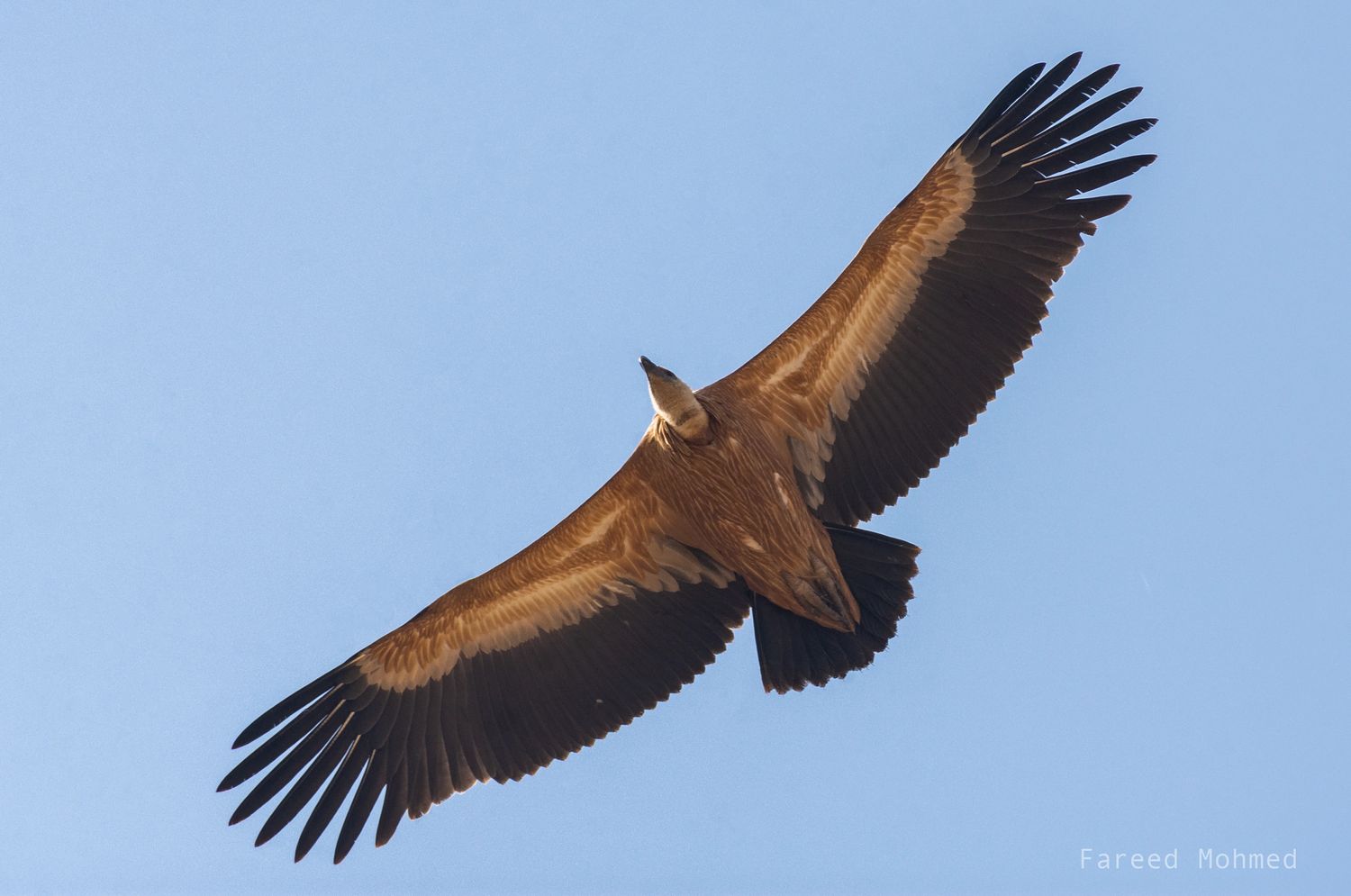
A note on the names. Both Eurasian and Himalayan Griffon were on the ground at Jorbeer on this visit, and at most angles — soaring, head-on, half-lit — I cannot honestly separate them. Those frames are labelled Gyps sp. rather than given a species they might not be. The cinereous, Egyptian and Steppe Eagle frames are unambiguous.
What is worth saying is that these are working birds. A vulture strips a carcass in under an hour and removes the disease with it. When they disappeared, feral dog populations rose in their place, and with them rabies. The clean-up crew was doing more for public health than anyone had bothered to measure.